

Overview
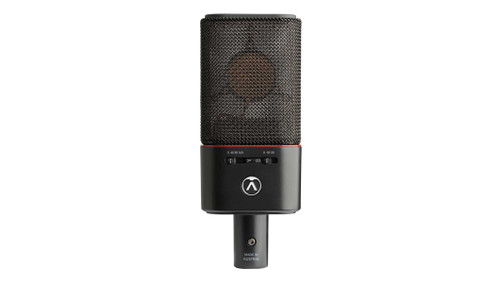
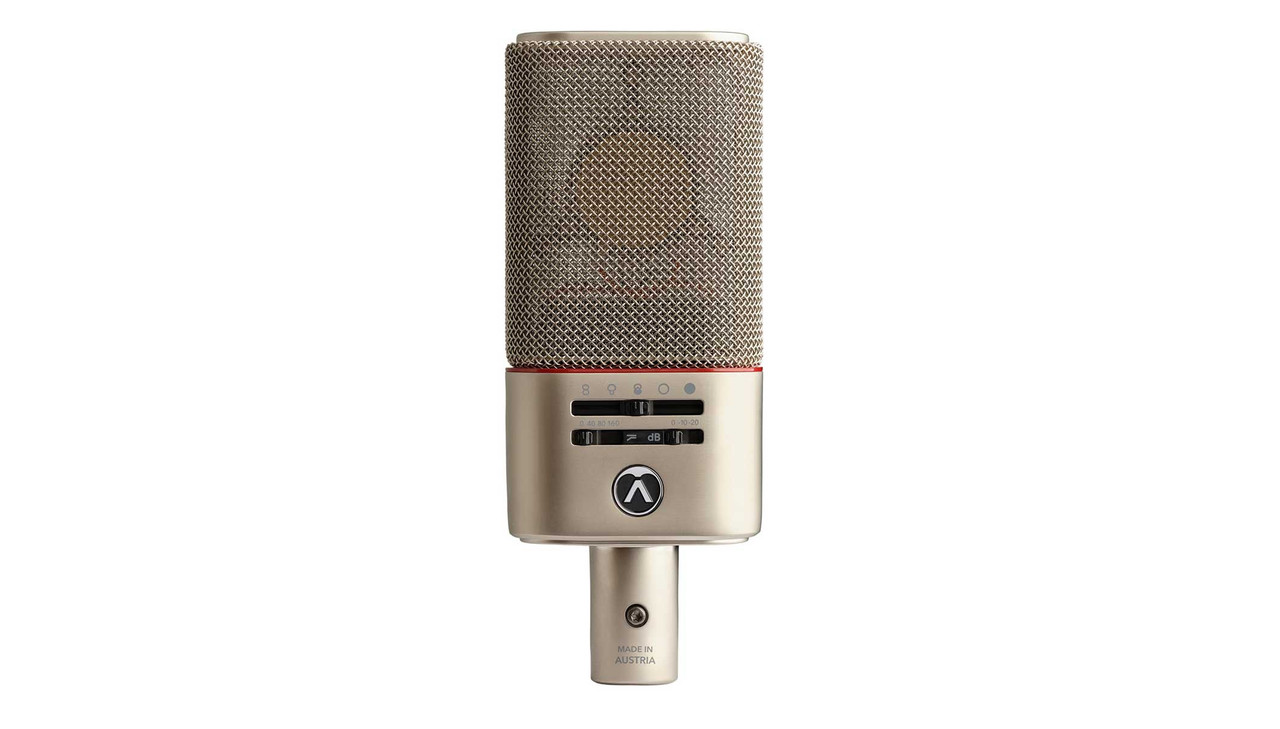
The Austrian Audio OC818 is the company's flagship large diaphragm condenser microphone, made in Vienna. Its handmade 1 inch dual diaphragm CKR12 ceramic capsule gives you omni, cardioid, hypercardioid and figure 8 patterns, plus a programmable setting, with very low self noise and very high SPL handling.
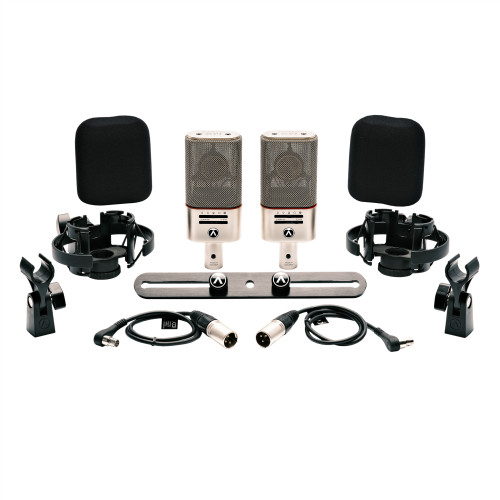
A second output on a mini XLR carries the rear diaphragm separately, so with Austrian Audio's free plug ins you can change the polar pattern after recording, or build stereo images from a single mic. Every OC818 is factory calibrated, so any two make a matched pair, and in cardioid it also pairs with an OC18. It suits studios, broadcast, orchestral and choir recording, churches and schools with serious recording needs, and engineers who want one microphone for almost every source.
Highlights
- 1 inch dual diaphragm CKR12 ceramic capsule, handmade in Vienna
- Omni, cardioid, hypercardioid, figure 8 and a programmable pattern
- Dual output lets you set the polar pattern after recording
- Very low 9 dB(A) self noise, up to 158 dB SPL with pad
- Switchable -10 dB and -20 dB pads and 40, 80, 160 Hz low cut
- Factory calibrated so any two OC818s make a matched pair
- Remote control with PolarPilot app via optional OCR8 Bluetooth dongle
Specifications
| Type | Large diaphragm true condenser, multi pattern |
| Capsule | 1 inch CKR12, dual diaphragm |
| Polar patterns | Omni, cardioid, hypercardioid, figure 8, programmable |
| Frequency range | 20 Hz to 20 kHz |
| Sensitivity | 13 mV/Pa |
| Self noise | 9 dB(A) |
| Max SPL | 148 dB SPL (158 dB SPL with pad) |
| Pad | -10 dB, -20 dB |
| Low cut | 40 Hz, 80 Hz, 160 Hz |
| Power | 48 V phantom |
| Outputs | 3 pin XLR main, 5 pin mini XLR rear diaphragm |
| Dimensions | 157 x 63 x 36 mm |
| Weight | 360 g |
| Includes | Spider mount, mini XLR cable, mic clip, windshield, case |
Forefront Tip
If you are not sure which pattern a source needs, record both diaphragms using the supplied mini XLR cable onto two tracks and choose the pattern in the mix with PolarDesigner. For a single recording over a choir or ensemble, figure 8 or omni often gives a more natural room sound than cardioid.